
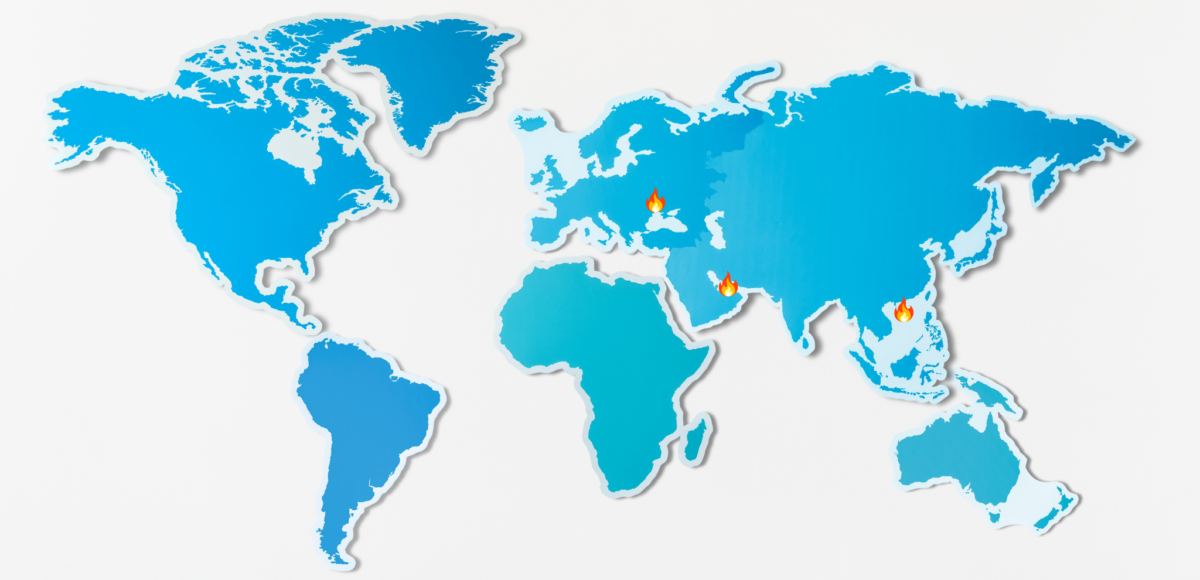
How Global Geopolitical Tensions Are Reshaping Business Risk in 2026

Introduction
At the World Economic Forum in Davos, Mark Carney warned that the global economy is entering a new phase where geopolitics and economics are deeply interconnected. Markets are no longer driven only by supply and demand. They are increasingly shaped by national security, political power, and strategic interests.
This shift is not theoretical. A factory in Germany is now exposed to energy supply risks linked to geopolitical conflict. A technology company in India must evaluate export restrictions and digital trade barriers. A global shipping firm monitors geopolitical hotspots alongside fuel costs and logistics data.
In 2026, geopolitical risk is a core driver of business strategy, global trade, and investment decisions.
The Changing Nature of Geopolitical Risk in 2026
Geopolitical risk has evolved from isolated disruptions into continuous global uncertainty. Businesses now operate in a multipolar world where economic policy, security concerns, and political tensions are tightly connected.
Trade wars, sanctions, and regional conflicts are no longer temporary shocks. They influence supply chains, foreign investment, talent mobility, and market access.
For example, rising US China tensions continue to affect global trade flows, technology transfer, and semiconductor access. At the same time, conflicts in key regions are disrupting energy markets and global shipping routes.
This creates a new reality. Geopolitical risk management is no longer reactive. It must be proactive and embedded into everyday business decisions.
Supply Chain Realignment and Global Trade Shifts
Global supply chains are undergoing structural transformation. The focus has shifted from cost efficiency to supply chain resilience and risk diversification.
Companies are adopting strategies such as China plus one, nearshoring, and friend shoring to reduce dependency on a single country. This trend is reshaping global trade networks and manufacturing hubs.
For instance, a consumer electronics company that once relied heavily on one region for production is now spreading operations across Southeast Asia and India. This reduces exposure to geopolitical disruption but increases operational costs.
The trade-off is clear. Businesses are prioritizing resilience, business continuity, and risk mitigation over short term efficiency gains.
Economic Nationalism and Regulatory Complexity
Economic nationalism is rising across major economies. Governments are implementing tariffs, subsidies, export controls, and industrial policies to protect domestic industries and secure strategic resources.
This creates a more fragmented regulatory environment for multinational companies.
A global manufacturer must now navigate different rules across regions. Local content requirements, ESG compliance standards, and trade restrictions vary significantly from one country to another.
For businesses, this increases compliance risk, operational complexity, and the need for localized strategies. Global expansion is no longer just about market opportunity. It is also about regulatory alignment and geopolitical positioning.
Technology, AI, and Cybersecurity Risks
Technology has become a central battleground in global geopolitics. Areas such as artificial intelligence, semiconductors, and data governance are now linked to national security.
Export controls on advanced chips, restrictions on technology transfer, and digital sovereignty laws are reshaping the global tech landscape.
At the same time, cybersecurity threats are rising. State linked cyberattacks, ransomware incidents, and data breaches are becoming more frequent and more sophisticated.
For example, financial institutions and logistics companies are increasingly targeted during periods of geopolitical tension. These attacks disrupt operations, damage trust, and create financial risk.
In 2026, digital risk management, cybersecurity resilience, and data protection are critical components of business strategy.
Business Adaptation Strategies for Geopolitical Risk
Businesses are responding to this new environment by strengthening their geopolitical risk frameworks and strategic planning capabilities.
Scenario planning has become essential. Companies are preparing for multiple outcomes such as trade restrictions, supply chain disruptions, and regulatory changes.
Diversification is another key strategy. Organizations are expanding supplier networks, entering new markets, and reducing geographic concentration risk.
Many firms are also investing in geopolitical intelligence. Dedicated teams track global developments and translate them into actionable business insights.
Collaboration is increasing as well. Companies are working with governments, industry bodies, and partners to navigate uncertainty and build resilience.
These strategies help businesses stay agile, informed, and competitive in a volatile global environment.
Conclusion
The global business landscape in 2026 is defined by geopolitical uncertainty, economic fragmentation, and strategic competition.
Yet, this environment also presents opportunities for companies that are prepared.
Organizations that integrate geopolitical risk analysis into their decision making can build stronger supply chains, improve market positioning, and enhance long term resilience.
This is where Exactitude International (EXI) is repositioning itself. EXI is embedding geopolitical intelligence into core business strategy, helping organizations anticipate disruption, adapt quickly, and make informed decisions in complex environments.
This brings us back to what Mark Carney emphasized in Davos. The line between economics and geopolitics has blurred.
The businesses that succeed in this new era will be those that recognize this shift early, act decisively, and turn uncertainty into strategic advantage.

Leave a Comment